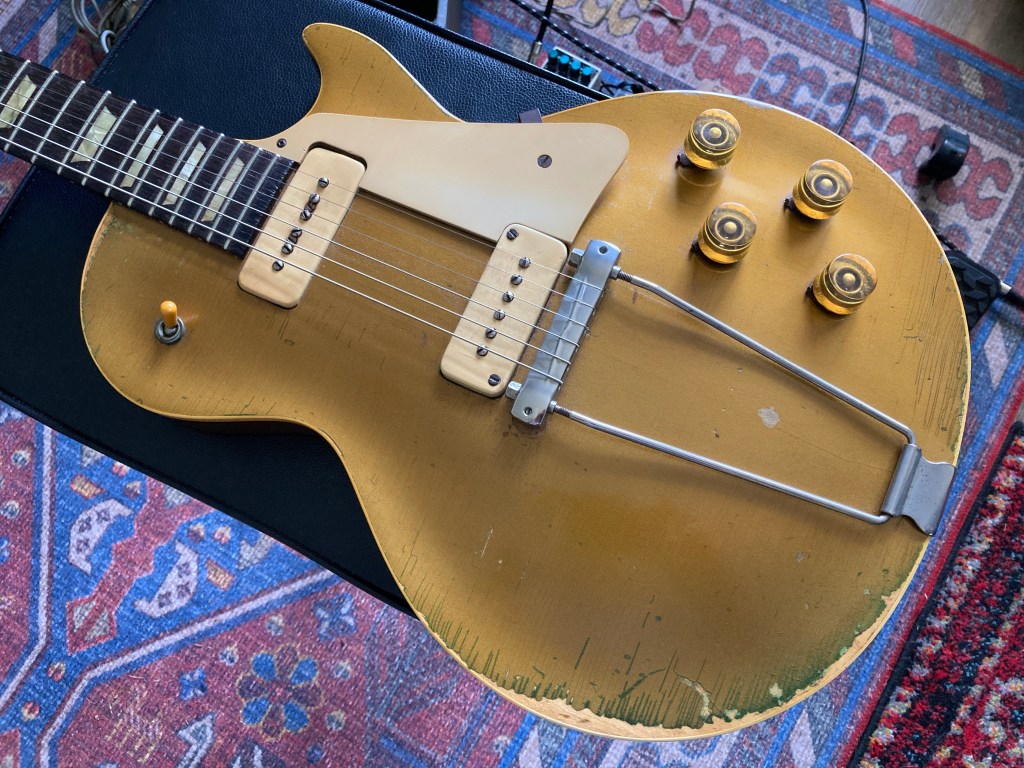
I recently recorded several tracks with a guitar that I cherish, my father’s Gibson Les Paul. It is both an heirloom and an artifact of historical significance, but is also an amazing musical instrument that should be played and not just displayed.
After stepping away from music to focus on his art career and family life, he started to play again in the mid-1980s, and this is the guitar he brought out. I was transfixed – a golden guitar! I thought it was a modern day Excalibur.
I never knew how the Les Paul came into our lives until a few years ago. Dad bought the guitar sometime in the late 1960s. He discovered it being used as wall art in someone’s home, and it had already had a full life as a regularly gigged guitar – the wear and tear shows that it was leaned up against tables and amps on a regular basis, and the gold finish has been worn away by the player’s picking arm. He repeatedly pleaded his case to buy the guitar until the owner couldn’t take it anymore! Lucky for us.
Dad played in a few bands while he also worked on his commercial art career. I’ll save some of those stories, many of them quite funny and possibly apocryphal, for a later post.
I can’t tell which event led him to put the guitar away for several years, my birth or the arrival of Mahavishnu Orchestra. He said when that group debuted, guitar players everywhere were shocked by the ferocity of John McLaughlin’s playing, and wondered what they’d been doing all those years honing their blues-based Eric Clapton licks. Of course, McLaughlin had by that time already had an illustrious jazz career, but Mahavishnu had made inroads into the rock world, which by the early 70s had a much longer reach and marketing budget.
Fun fact: I just discovered that they played Atlanta Symphony Hall with Ravi Shankar on September 9, 1972, twenty days before I was born in Northside Hospital. In May of the same year they played The Atlanta Sports Arena with the Hampton Grease Band opening.
Modifications
In any case, the Les Paul was put in its case and hidden away for years. By the mid-1980s, as my friends and I were starting to get into music, dad’s interest in playing returned, and the guitar made its first appearance. He had modified it a bit over the years, but nothing that took away from its seductive sparkle.
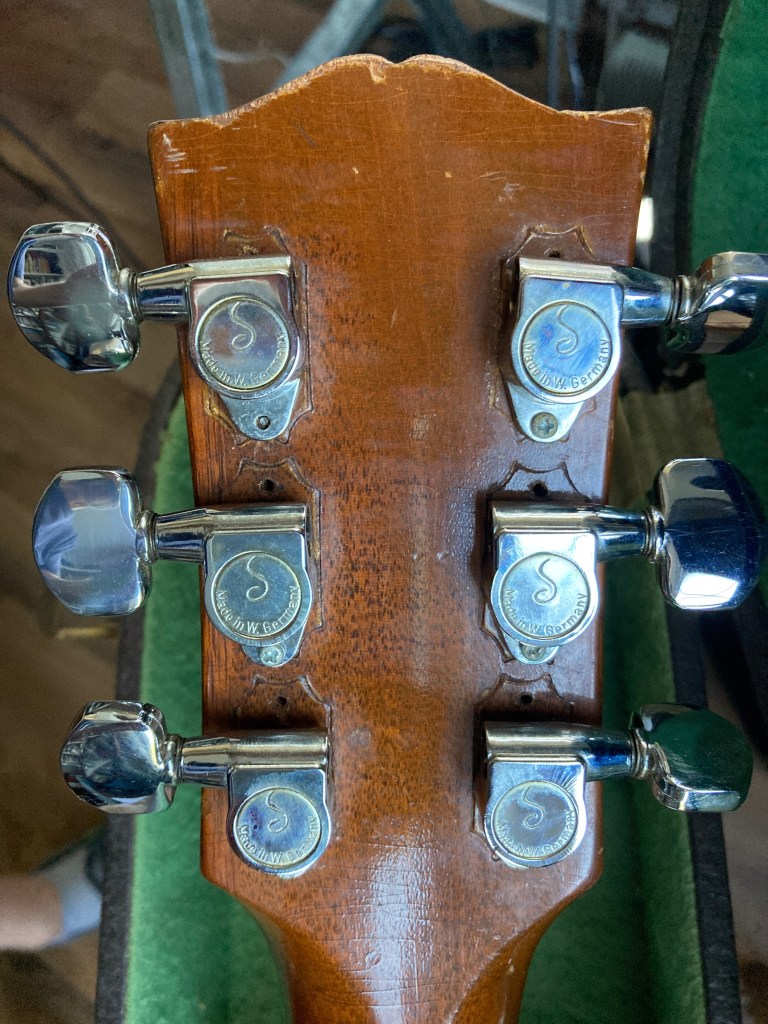
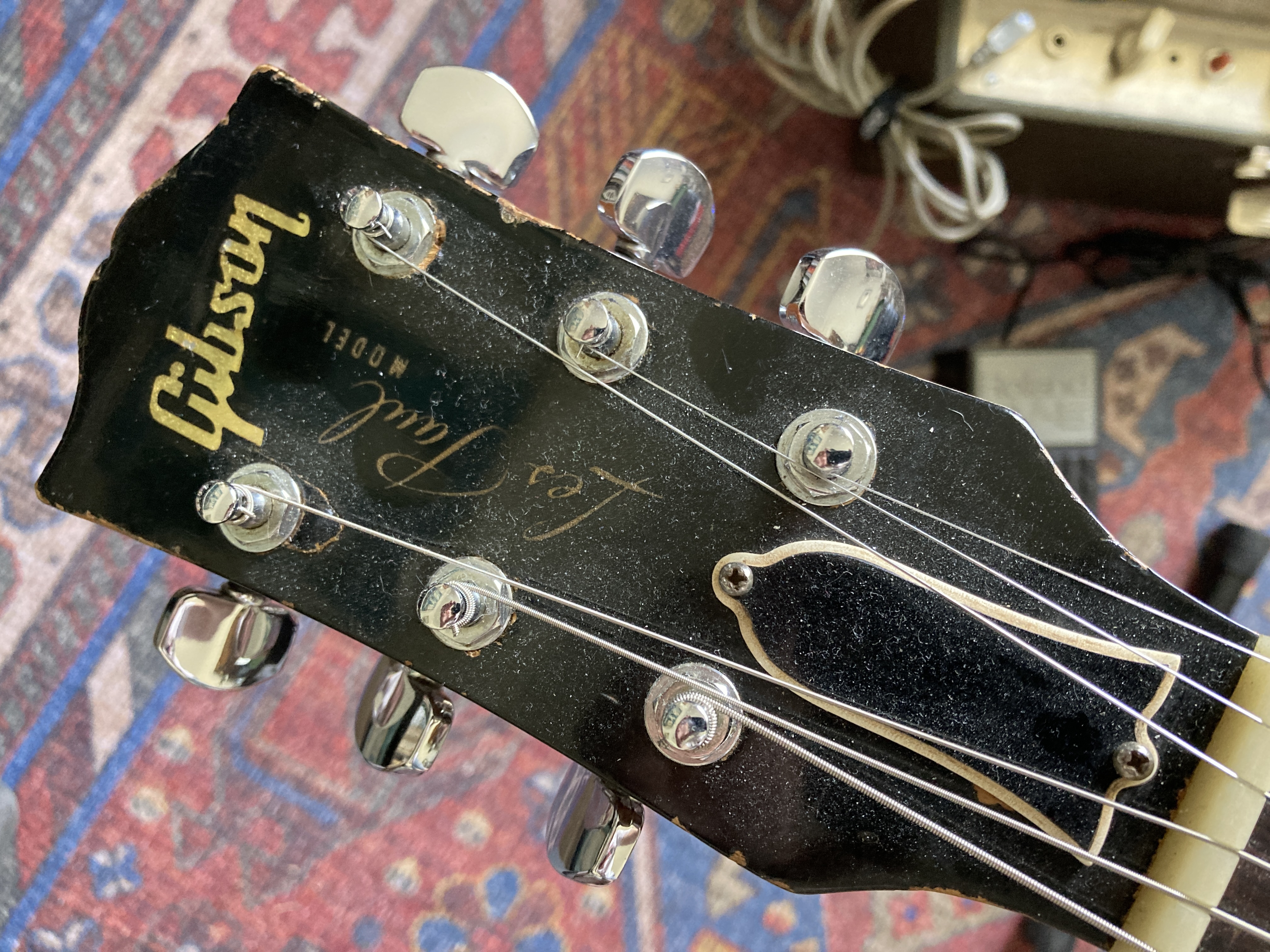
A typical “mod” one sees on the older Les Pauls is the replacement of the original Kluson tuners, which can be prone to slipping gears. Bulkier Grover or Schaller tuners were the usual replacements, and this one has a set of 1970s Schallers. They are embossed with “Made in W. Germany.”
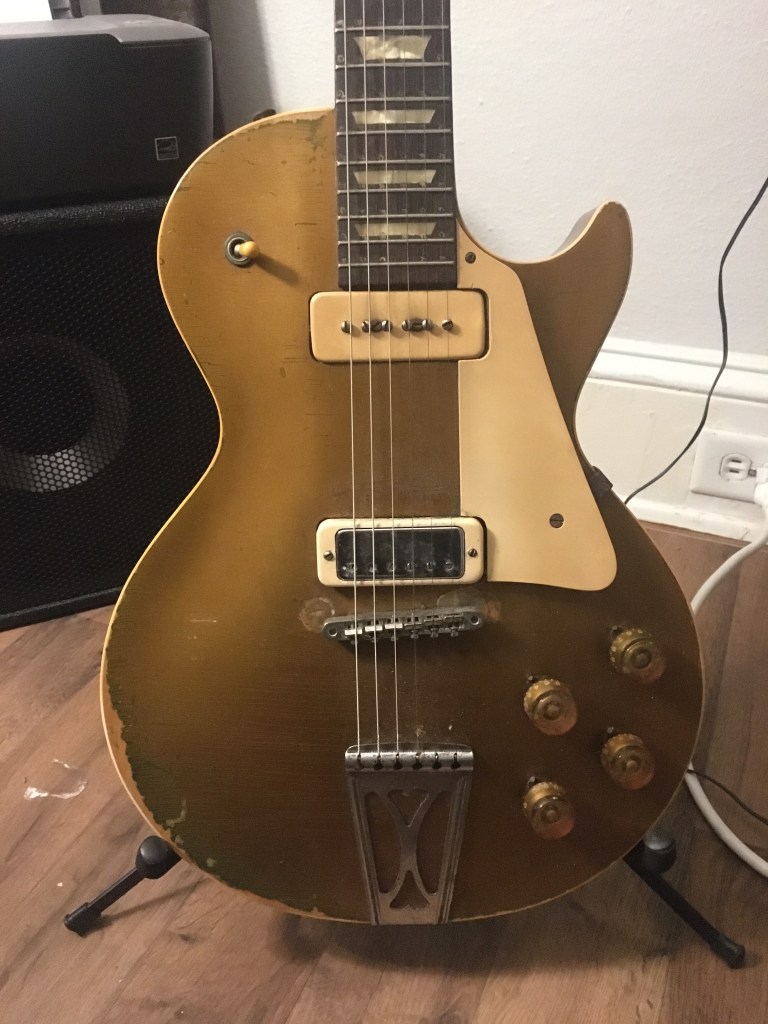
A 1970s Gibson mini-humbucker pickup had replaced the original P-90 bridge pickup, due to a perceived lack of power after a fall from the back of a truck after a gig. Thankfully, the guitar was in its case! I found the original P-90 in dad’s collection of guitar bits and bobs, which has been reunited with the guitar – now I have a mini-humbucker; I need to do something with it.
The earliest Les Paul models featured a trapeze bridge/tailpiece combo that is supposedly difficult to use with the typical guitarist palm-muting technique – an oversight in the design that made the neck angle too shallow. Dad removed that bridge and added a Harmony acoustic guitar tailpiece and a later Tune-o-matic bridge, simply held in place by the strings.
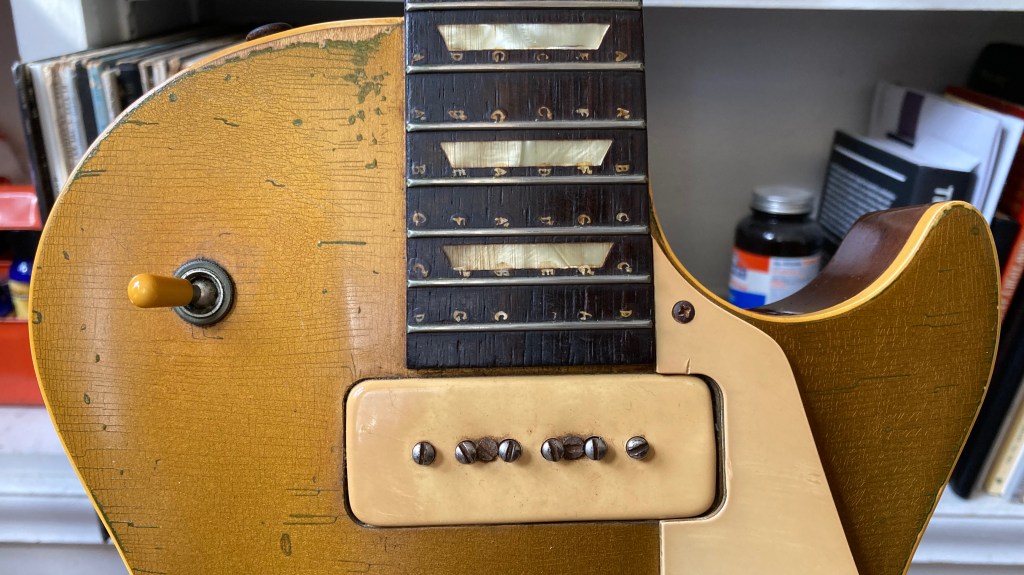
The last modification was the addition of painted note names for every fret. Maybe he was more of a folky than a jazzer – he used sharps rather than flats! These notes were painted on top of dabs of Liquitex masking fluid so they could be peeled off at some point.
Dad would sit in our “library” room on a couch, smoke menthols, and wail on the guitar, running it through a Fuzz Face and a little Supro amp. My friends loved to hear him play, and many of them felt like my house was a place where they could be themselves and explore their creativity – I’m proud of that.
After picking the guitar back up, dad became interested in home recording, and recorded several songs with an ever-growing collection of Realistic/Radio Shack EQs, mixers, and reverbs: a four-track recorder; cheap drum machines; and a nightmare tangle of MIDI cables. The Les Paul was used for several of these tracks. He considered them song demos, as he didn’t have commercial studio-worthy gear, but he would obsess over the mixes for hours and hours. There is great creativity in the ideas and mixes, and although the British blues and psychedelic influence is strong, I also hear banjo-like flourishes and folk figures that he picked up from Earl Scruggs and the Kingston Trio.
He gifted the guitar to me as a high school graduation gift, but as summer progressed the idea started to stress him. Me too! Mom and dad eventually gifted me a black Les Paul Studio which I used for many years, until the weight of it started to make my hands go numb during multi-set jazz gigs, and I moved on to a semi-hollow style guitar.
Dad had moved on to putting together his own parts guitars in the 1990s, so the Les Paul was stored away for another 20 years or so. I would sometimes ask to see it, and he’d bring it out for me to marvel.
Life Carries On
After he passed in early 2021, I wanted to refurbish the Les Paul, as it was a foundational part of our shared enthusiasm for the guitar. It was a way of honoring his legacy and influence, something I think about every time I play it. Although it is as structurally sound as a coffee table, the original frets were worn down almost to the fretboard, the controls were frozen, and it needed cleaning up if I or anyone wanted to play it.
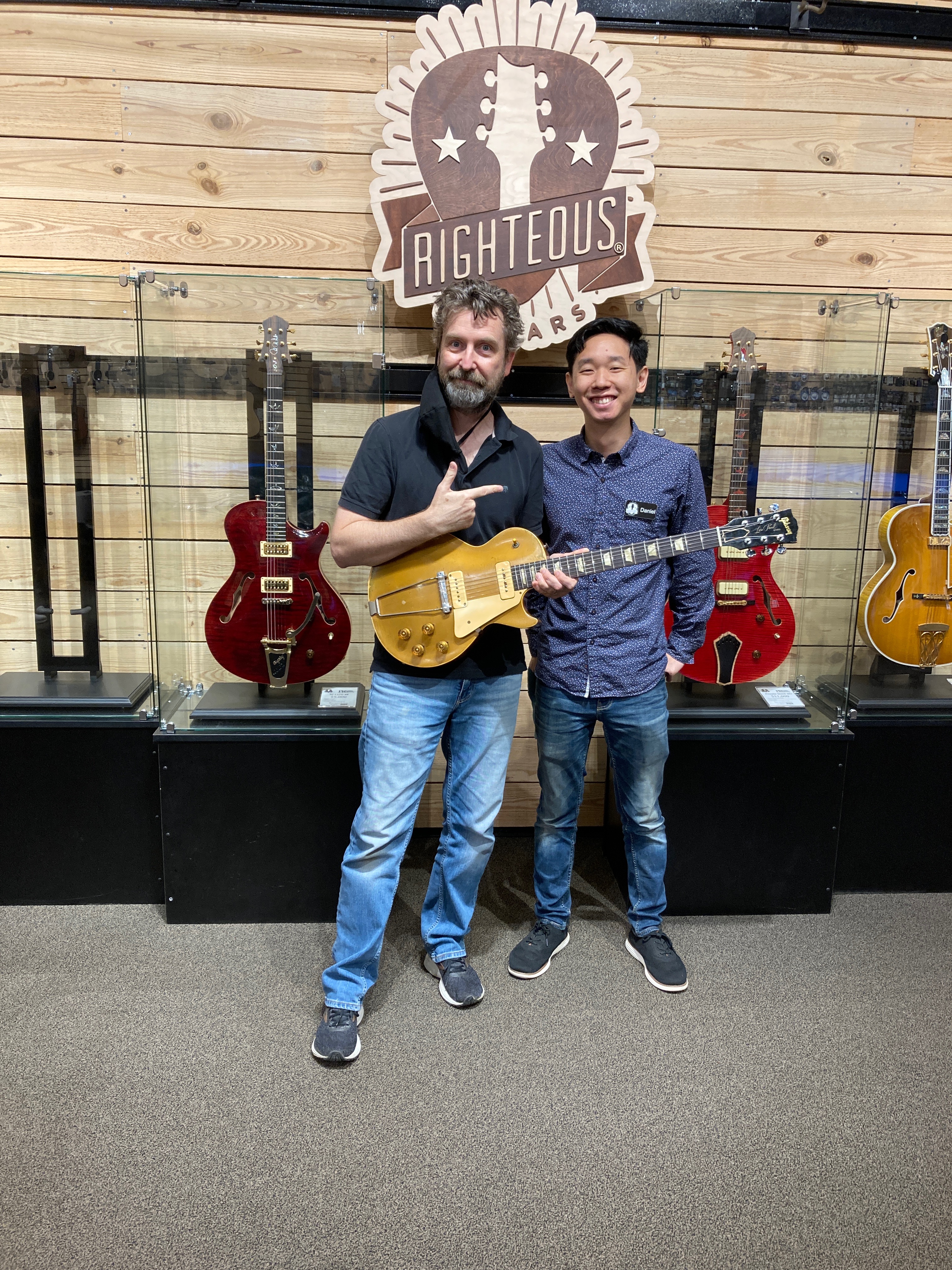
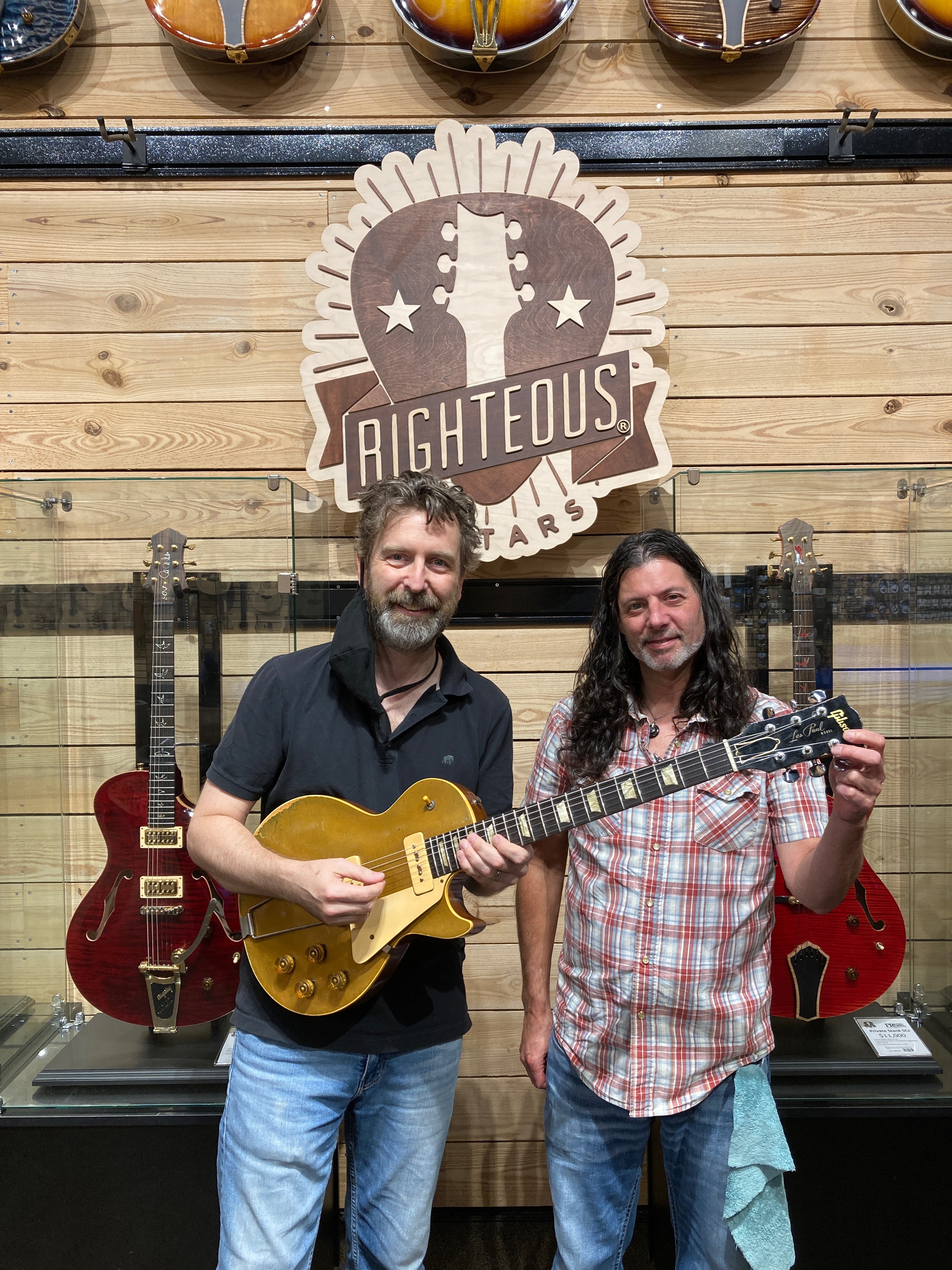
Righteous Guitars did an expert job on the “mini-restoration”. The new fret wire is the same as on the Gibson Historic models, not too thin nor fat. A new nut was added, and the guitar put through the mysterious PLEK machine for a super-precise setup. The trapeze/bridge was reattached, but with a MojoAxe bridge which addresses the original playing issues. The original P-90 bridge pickup was added back in, and it hasn’t lost any power at all. The Schallers were kept in place. One frozen tone pot was replaced. Dad had replaced the original jack plate long ago with a crudely cut Crisco lid, so I bought a new one and added that myself.
Provenance
The production numbers for the first Les Paul “Standard” model run were the highest in the first few years. As Gibson introduced more solid-body models through the 1950s and guitarist Les Paul’s star faded, they cut back on the number of Standards built.
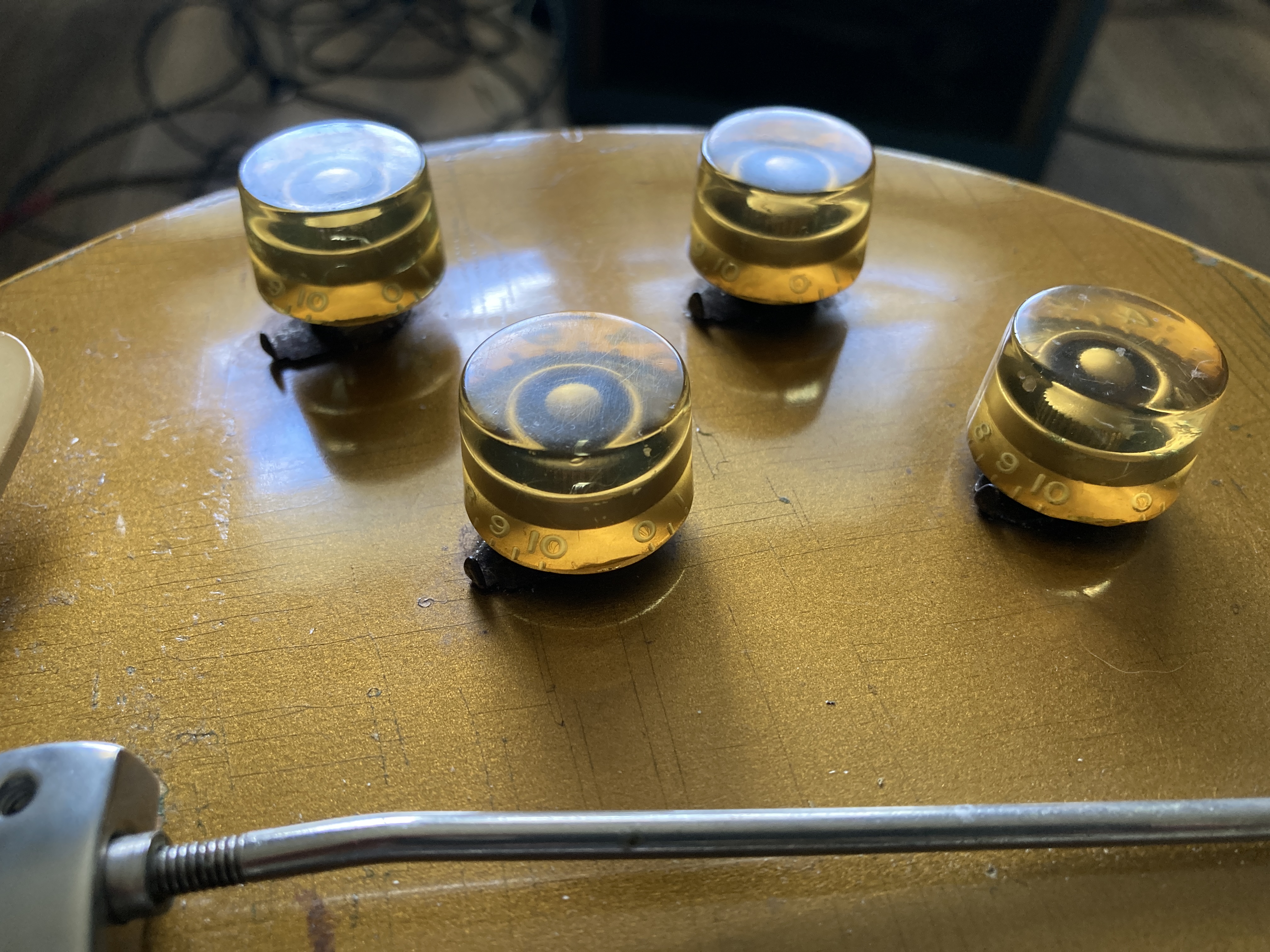
This Les Paul is unique among the early year models. There are several tells that show that it is from the very first batch of instruments that left the Gibson factory: the dot of the “I” in Gibson is attached the G; the bridge has diagonal mounting screws that avoid the wiring channel beneath; the tall speed knobs; no binding on the neck; no serial number (date can be ascertained by the codes on the control pots); and the body is 1/8″ thicker than all later Les Pauls.
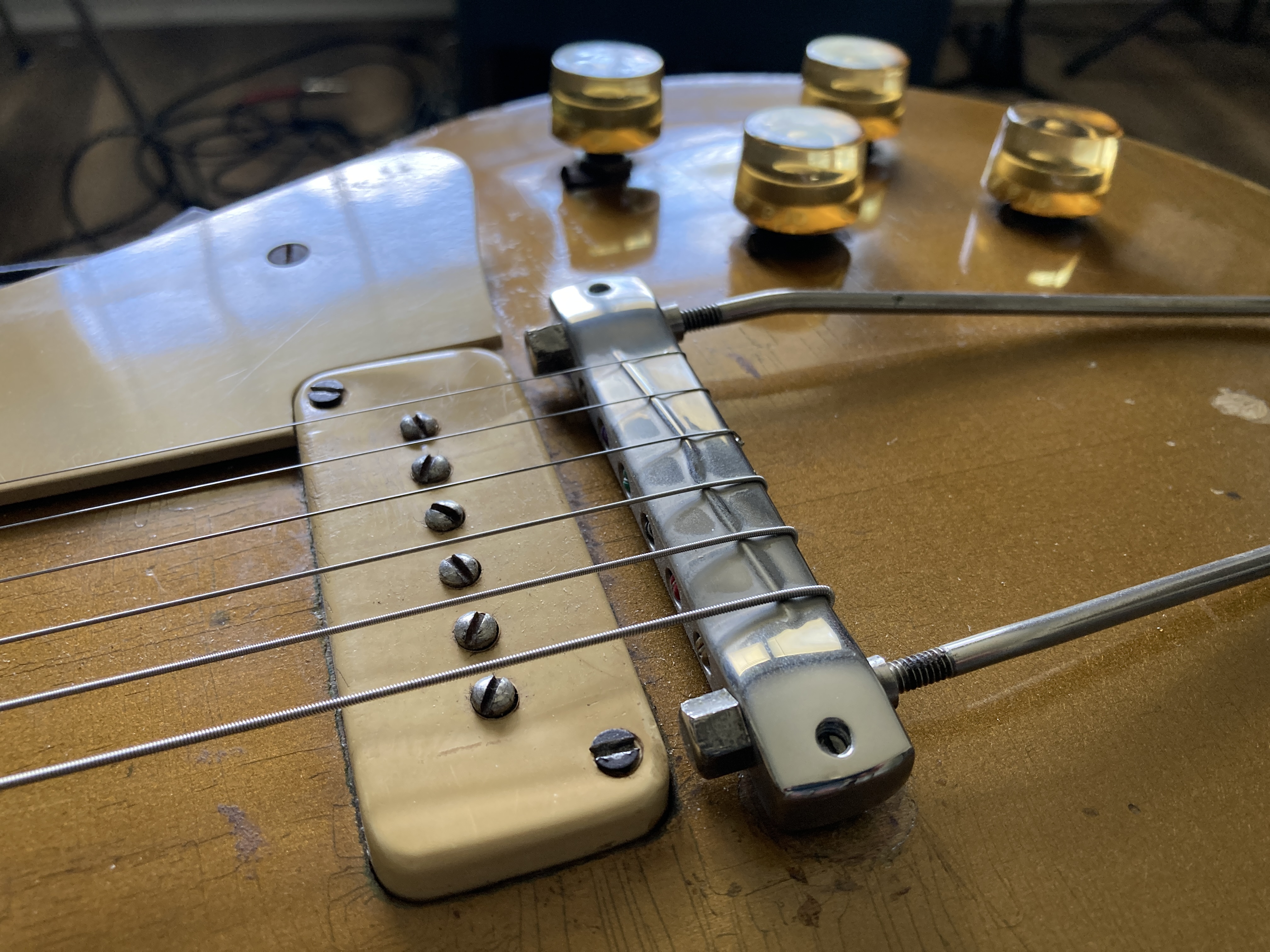
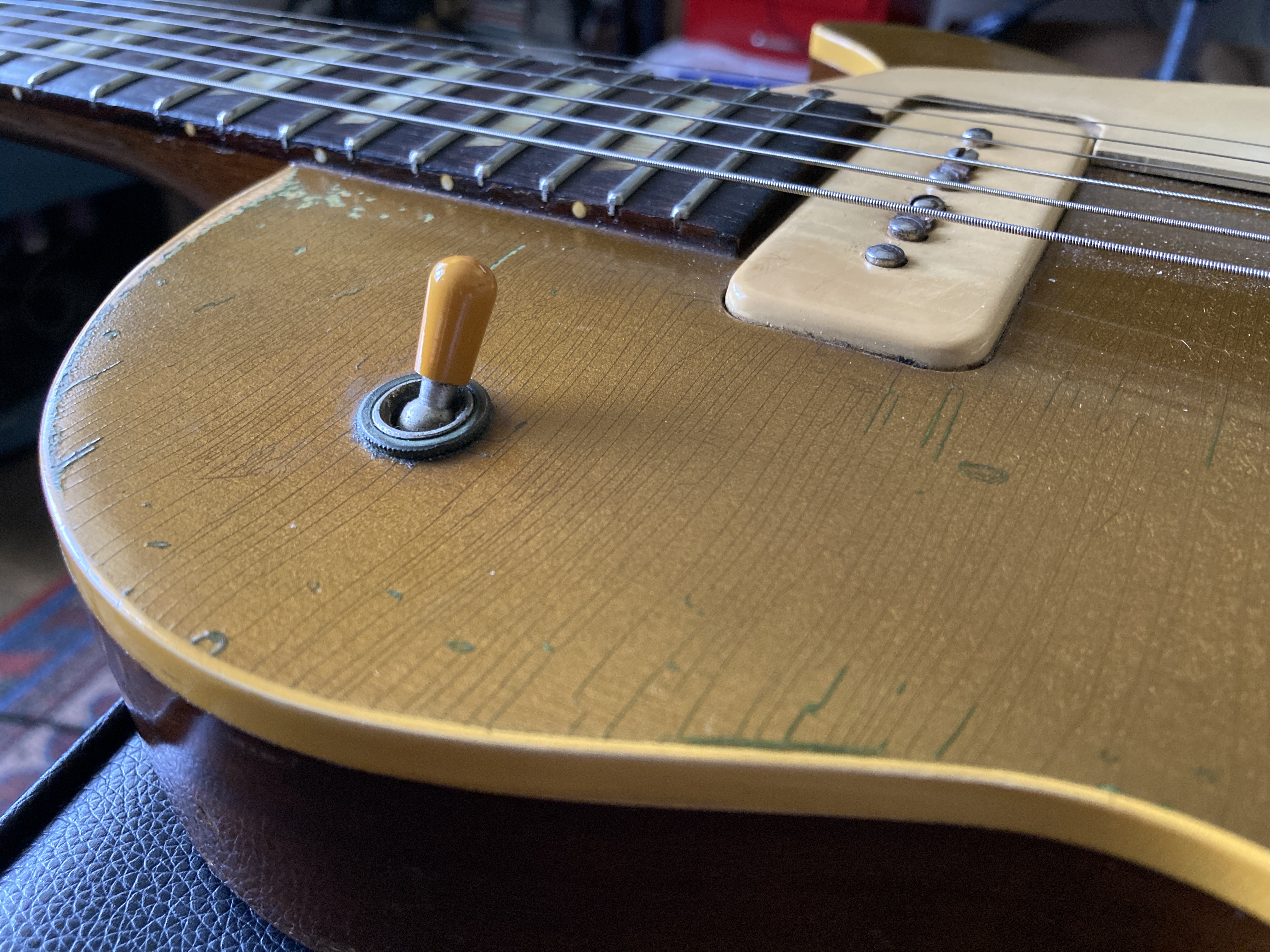

So how does it sound and feel? Heavy!
There’s something about it that I haven’t really found in any other Gibson-style instruments I’ve owned. Perhaps it is the shallow neck angle, the bridge design, or those new frets, but notes have a unique envelope and a lot of sustain, even unplugged. Nigel Tufnel would approve! I’ve heard some players say that the bridge design gives an almost sitar-like envelope to higher notes, which I can kind of hear when bending.
It wants to sing no matter the sound one dials up. The pickups are powerful and noisy, and it gives the impression that while the voicing is from the past, what it is saying is immediate and present.
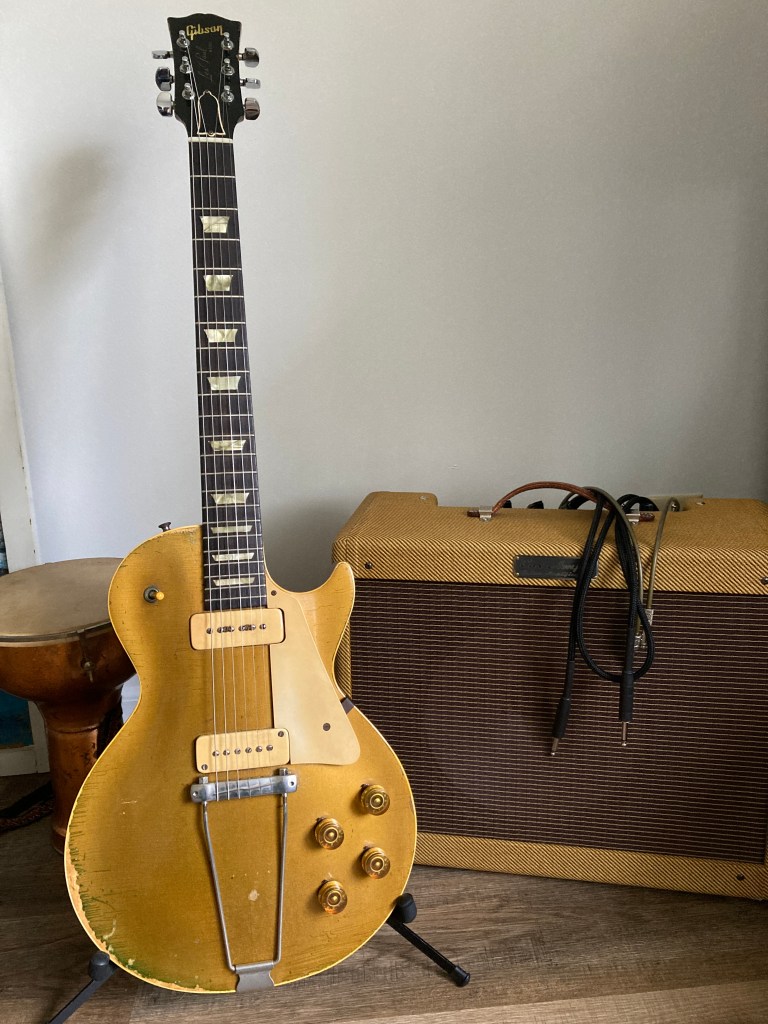
I wonder who first used the guitar, and what music was played on it. Did it pass through the hands of someone like Sister Rosetta Tharpe or Muddy Waters? It has been played well, and I like to imagine that it made blues music nightly at some juke joint and gospel music on Sundays.
 Colin Bragg